
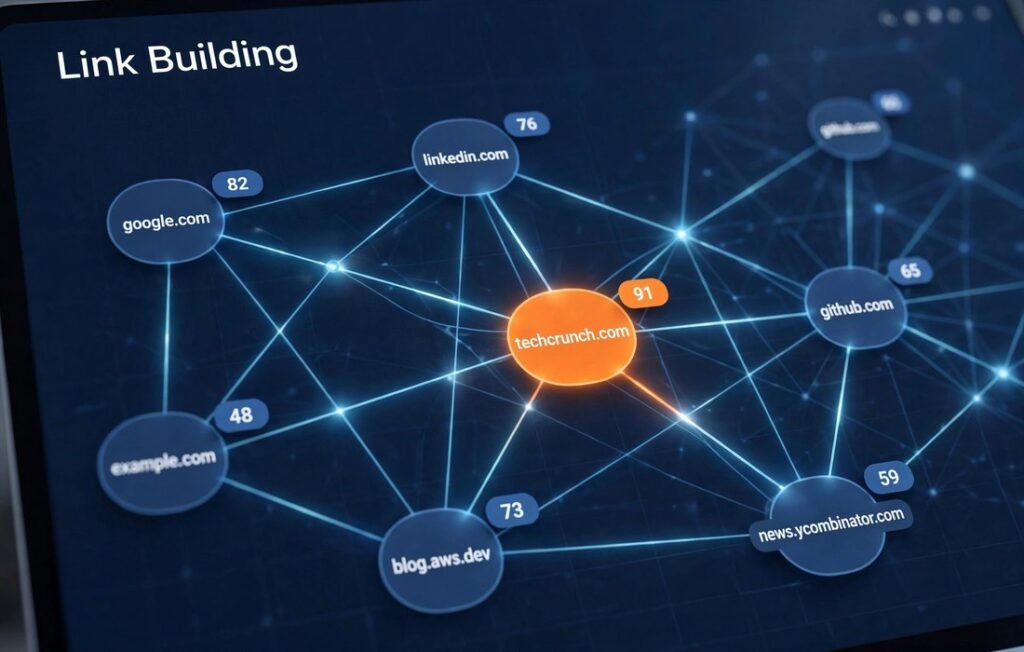
Short answer: The link building strategies that work in 2026 all share one trait: they earn links by creating genuine value — original research, expert commentary, useful tools, and real relationships. Paid links, PBNs, and automated spam will get you penalized. Below are 9 white-hat strategies our team uses for clients right now.
Key Takeaways
- Backlinks remain one of Google’s confirmed core ranking signals — but quality thresholds have never been higher.
- One editorial link from an authoritative site outweighs hundreds of low-quality links.
- The best strategies earn links as a byproduct of creating something worth citing.
- Link building and digital PR have converged — think like a publicist, not a spammer.
- Never buy links or use private blog networks; Google’s spam enforcement keeps getting sharper.
Why Backlinks Still Matter
Let’s settle this first: yes, backlinks still matter enormously. Google has confirmed repeatedly that links are a fundamental ranking signal, and every major industry correlation study (Moz, Ahrefs, Backlinko) finds the same thing — pages with more high-quality referring domains rank higher. What changed isn’t whether links matter, but which links count. Relevance, authority, and editorial placement are everything now.
9 White-Hat Link Building Strategies for 2026
1. Original Research and Industry Surveys
The single highest-ROI link building asset. Run a survey in your industry, publish the findings with clean charts, and pitch the data to journalists and bloggers. Original statistics get cited for years — each citation is a natural, editorial backlink. Even a survey of 200 professionals in your niche can earn dozens of links.
2. Digital PR and Expert Commentary
Journalists need expert quotes daily. Services like HARO alternatives, Featured.com, and direct outreach to reporters put your expertise in articles on authoritative news sites. One quote in a major publication can deliver a high-authority link plus brand exposure that AI assistants later cite.
3. Broken Link Building
Find dead links on resource pages in your niche (tools like Ahrefs’ broken link checker help), create or identify content that replaces the dead resource, and email the site owner with a helpful suggestion. You’re doing them a favor — fixing their site — which is why response rates are among the highest of any outreach tactic.
4. The Skyscraper Technique (Done Right)
Find the most-linked content on a topic, create something genuinely 10x better (more current, more comprehensive, better designed, with original examples), then pitch it to everyone linking to the original. The key in 2026: “better” must mean substantively better, not just longer. Add data, visuals, or expert input the original lacks.
5. Free Tools and Calculators
Interactive tools earn links on autopilot. A mortgage calculator, a headline analyzer, a free audit tool — useful utilities get bookmarked, shared, and linked from “best free tools” roundups indefinitely. The upfront development cost pays dividends for years.
6. Guest Posting on Real Publications
Guest posting isn’t dead — spammy guest posting is. Writing genuinely excellent articles for respected publications in your industry still earns quality links and referral traffic. The test: would you proudly show the article to a potential client? If yes, pitch it. If it’s keyword-stuffed filler for a link farm, skip it.
7. Podcast and Webinar Appearances
Every podcast episode gets a show-notes page — usually with a link to the guest’s site. Appearing on 10 relevant podcasts means 10 natural, contextual backlinks plus audience exposure. Pitch hosts with specific topic ideas, not generic “I’d love to be a guest” emails.
8. Resource Page Outreach
Universities, associations, and niche blogs maintain “helpful resources” pages. If you have genuinely useful content (guides, tools, research), a polite, personalized email suggesting its inclusion works surprisingly well — especially for .edu and .org pages that rarely get pitched properly.
9. Unlinked Brand Mentions
People already mention your brand without linking. Set up alerts for your company name, product names, and key people — then email each mentioner with a friendly request to make the mention clickable. These are the easiest links you’ll ever earn because the hard part (getting noticed) is done.
What to Avoid at All Costs
- Buying links — explicitly against Google’s spam policies; penalties range from ignored links to manual actions.
- Private blog networks (PBNs) — Google’s detection keeps improving; networks get deindexed in waves.
- Automated outreach spam — 10,000 generic emails burn your domain reputation and earn nothing.
- Link exchanges and schemes — “you link me, I link you” at scale is a documented spam pattern.
- Low-quality directories and forum spam — these links are simply ignored at best.
How to Evaluate a Backlink Opportunity
Before pursuing any link, check: Is the site real, with actual traffic and an editorial process? Is it topically relevant to your business? Would you want this link even if Google didn’t exist (referral traffic, brand exposure)? If the answer to all three is yes, pursue it. Tools like Moz’s Domain Authority or Ahrefs’ Domain Rating help quantify, but relevance and legitimacy matter more than any single metric. Learn more about how links fit into the bigger picture in our SEO strategy guides.
FAQ
How many backlinks do I need to rank?
There’s no magic number — it depends on your competition. Analyze the referring domains of the top 5 results for your target keyword; that’s your benchmark. Quality beats quantity: 20 authoritative relevant links outperform 2,000 spammy ones.
How long does link building take to impact rankings?
Typically 2–4 months before new links fully influence rankings, as Google needs to crawl, evaluate, and trust them. Link building is a compounding long-term investment.
Can I do link building myself?
Yes for basic tactics (unlinked mentions, resource pages), but effective digital PR and outreach at scale require systems, relationships, and persistence most teams lack in-house. That’s exactly what our backlink building service handles.
Are nofollow links worthless?
No. Nofollow links drive referral traffic, build brand visibility, and contribute to a natural link profile. Google also uses them as hints. A healthy profile includes both.
The Bottom Line
White-hat link building in 2026 is simple but not easy: create things worth citing, then make sure the right people see them. No shortcuts, no schemes — just value and outreach. See how our team earns authoritative backlinks or get a free link profile audit.